


PACU nursing priorities can feel difficult in an exam question because several concerns may appear at once: a patient is sleepy, their oxygen saturation is falling, they are in pain, and their blood pressure has changed. Which action comes first? For nurses preparing for the UK Nursing and Midwifery Council (NMC) computer-based test (CBT), the answer depends on recognising immediate threats and choosing a safe, proportionate response. The post-anaesthesia care unit (PACU), often called the recovery area, is where patients are monitored as they emerge from anaesthesia or sedation. This guide explains what to assess, how to prioritise complications, and how to approach CBT questions without relying on memorised shortcuts. It also covers practical CBT exam administration and revision tips for internationally educated nurses. This is an educational guide; always follow current local policies, the patient’s care plan and the latest NMC guidance.
What happens in PACU, and why is it important for the NMC CBT?
Patients in PACU have recently undergone an operation, procedure or intervention involving an anaesthetic. Depending on the procedure, they may have received a general anaesthetic, regional anaesthetic or sedation. Their condition can change quickly as medication effects wear off, pain increases or complications become apparent. Safe recovery nursing therefore combines repeated assessment, timely treatment, clear communication and escalation.
For the NMC CBT, focus less on obscure recovery-room equipment and more on the principles that apply across clinical settings: protect the airway, support breathing, identify circulatory problems, respond to altered consciousness, prevent harm and communicate concerns. A question may present a post-operative patient without using the word “PACU”; clues include recent surgery, anaesthesia, transfer from theatre, recovery observations or a handover from the anaesthetic team.
Remember the difference between exam reasoning and an instruction to practise independently. In a real PACU, assessment and interventions are coordinated with the anaesthetist, recovery team and local emergency processes. Work within your competence and escalate promptly. The NMC Code emphasises preserving safety, practising effectively and communicating clearly; these principles underpin good answers to priority-setting questions.
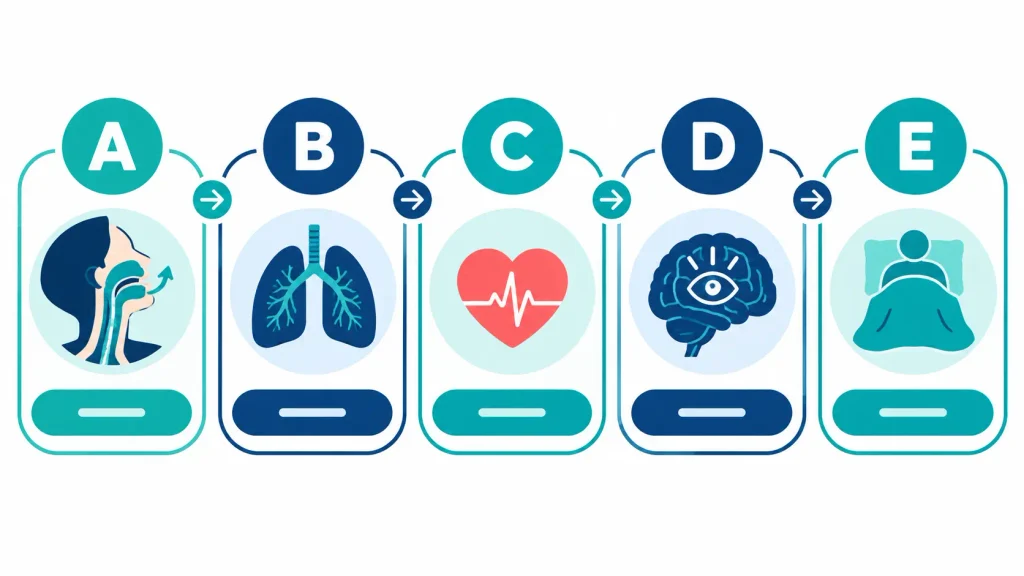
Use an ABCDE approach to decide what comes first
When a CBT question asks for the first, most urgent or priority nursing action, identify an immediate threat before considering comfort, documentation or routine discharge planning. ABCDE provides a useful structure: Airway, Breathing, Circulation, Disability and Exposure. It is not a substitute for clinical judgement: a catastrophic bleed also requires immediate action, and teams may assess and treat problems simultaneously.
Airway: check for obstruction before routine observations
After anaesthesia, reduced consciousness, relaxed airway muscles, secretions or vomiting may obstruct airflow. Listen and look for noisy breathing, snoring, gurgling, silence despite respiratory effort, poor chest movement or an inability to maintain an open airway. An apparently sleepy patient who cannot maintain their airway is not simply “resting”.
In an exam scenario, prioritise immediate assessment, call for help and take appropriate airway-support measures within your training and local protocol. Repositioning the patient and providing basic airway manoeuvres may be appropriate, while advanced devices require appropriately trained staff. Do not leave an unstable patient to fetch paperwork or prepare a routine discharge. If a patient vomits or has blood in the airway, protect against aspiration and seek urgent assistance.

Breathing: assess ventilation, not just oxygen saturation
Check respiratory rate, depth and effort, chest movement, skin colour and oxygen saturation, alongside the patient’s level of alertness. A falling saturation may indicate a problem, but pulse oximetry does not replace assessment of ventilation. Slow or shallow breathing after opioids or anaesthesia is especially concerning. Consider the patient’s baseline and prescribed oxygen target range rather than assuming one oxygen level suits everyone.
Follow local guidance for oxygen therapy, monitor the response and escalate if breathing remains inadequate. A patient who is difficult to rouse and breathing poorly needs urgent review, even if the monitor initially looks reassuring. When studying respiratory warning signs, you can also review Mentor Merlin’s guide to recognising breathing difficulty in CBT scenarios.
Circulation: look for bleeding and poor perfusion
Assess pulse, blood pressure, capillary refill, skin temperature, surgical dressing, drains and fluid balance as appropriate. Compare findings with earlier observations and the expected post-operative course. A rising pulse, falling blood pressure, increasing drain output or a rapidly soaking dressing may suggest bleeding or shock. However, no single reading tells the whole story: pain, medication and the patient’s usual blood pressure can affect observations.
Visible blood loss or new signs of poor perfusion require timely escalation to the relevant clinician and continued monitoring. Do not assume the problem is solved merely because a dressing has been reinforced. If a question offers “give a drink”, “record observations later” or “seek urgent review” for a patient with signs of serious deterioration, consider which option addresses the immediate risk.
Disability and exposure: complete the picture
Assess consciousness and responsiveness, including whether the patient is becoming more or less alert. Check blood glucose where indicated by the presentation and local policy. Observe for new confusion, unusual weakness, seizures or concerning responses to medication. With regional anaesthesia, assess the return of sensation and movement according to the handover and recovery protocol.
Exposure means looking for relevant complications while preserving warmth, dignity and privacy. Check the wound and accessible skin, watch for shivering or temperature changes, and consider whether positioning or equipment could cause harm. Once immediate threats are addressed, revisit the whole ABCDE assessment: a single apparently normal observation should not end your review.

Common post-anaesthesia complications and safe responses
CBT questions often ask you to distinguish expected recovery effects from unexpected deterioration. Mild drowsiness, discomfort or nausea may occur after a procedure, but their severity, progression and accompanying signs matter. If a symptom threatens airway, breathing or circulation, it moves up the priority list. Think in terms of recognise, respond, reassess and report.
Respiratory depression and reduced consciousness
Opioids, sedative medicines and residual anaesthetic effects can reduce breathing and alertness. A patient who is increasingly difficult to wake, has a low respiratory rate or has inadequate chest movement needs immediate assessment and help. Do not treat low oxygen saturation as an isolated number while overlooking poor ventilation. If a medicine-related cause is suspected, qualified staff may consider specific treatment under local protocols and prescriber direction; the priority for the candidate is safe recognition and escalation.
Bleeding, hypotension and fluid concerns
A small amount of wound drainage may be expected after some procedures; rapidly increasing bleeding is not. Review the dressing, drains, observations and fluid records, and communicate the trend. Hypotension can have several causes, including blood loss or anaesthetic effects, so avoid selecting a definitive diagnosis from one reading alone. Maintain a safe environment, obtain urgent help where indicated and follow the clinician’s plan.
Pain, nausea and vomiting
Once immediate physiological threats have been addressed, assess pain using an appropriate scale, location, onset and response to previous treatment. Check prescriptions and allergies before administering any medicine. Reassess both pain relief and adverse effects after an intervention, particularly when opioids could affect breathing or consciousness. Severe pain may also signal a complication and should not automatically be dismissed as routine.
Nausea or vomiting needs attention because it causes distress and can increase aspiration risk if the patient is drowsy. Position and observe the patient safely, protect the airway, use prescribed antiemetics according to policy and escalate persistent symptoms. In a priority question, a vomiting patient who cannot protect their airway takes precedence over a fully awake patient reporting mild nausea.
Temperature, shivering and unexpected deterioration
Monitor temperature and follow local measures to keep the patient warm. Shivering can be uncomfortable and may increase physiological demand; persistent or severe symptoms need assessment. Be alert to rapidly worsening observations, unusual muscle rigidity or other unexpected changes after anaesthesia. Such findings warrant urgent review rather than a confident diagnosis made from a short exam stem. The safest answer usually combines immediate assessment with escalation, not delay.
Handover, monitoring and transfer: the practical PACU checklist
A safe recovery begins with a structured handover from the anaesthetic or theatre team. Confirm patient identity, procedure, anaesthetic technique, relevant history and allergies. Ask about airway or breathing concerns, medicines given, blood loss, fluids, analgesia, antiemetics and anticipated complications. Establish what observations are required, which findings are expected and whom to contact if the patient deteriorates.
During recovery, record observations at the frequency specified by local protocol and increase surveillance if the patient’s condition changes. Document both findings and actions: what you noticed, who you contacted, what was done and how the patient responded. Use a recognised escalation tool or early warning process where applicable. Structured communication such as Situation, Background, Assessment and Recommendation (SBAR) can make an urgent call clearer.
Transfer out of PACU is not based on the clock alone. Check that airway and breathing are stable, circulation and consciousness meet local criteria, symptoms are managed and handover is complete. Specific discharge or transfer criteria vary between services, patients and procedures. The receiving team needs to know what happened in theatre, which medicines were administered, what remains to be monitored and any unresolved risks.
For exam questions, distinguish readiness for transfer from readiness to go home; day-case discharge has additional requirements. Do not assume a patient is fit to leave because their pain has improved if they remain unusually drowsy or haemodynamically unstable. For more on safe post-operative movement after recovery, read Mentor Merlin’s early ambulation and NMC CBT guide.

How to answer PACU priority questions in the UK CBT
The NMC CBT tests knowledge and clinical judgement through computer-based questions. Consult the NMC information for internationally trained applicants and your booking provider for current exam arrangements rather than relying on an old revision post. The essential clinical habit is to read the question stem carefully before looking for familiar phrases in the options.
First, underline the task mentally: does it ask what to assess first, what to do first, what requires immediate escalation or whether a patient is safe to transfer? These are different decisions. Next, pick out changes from baseline: new confusion, a falling saturation, worsening hypotension or increasing wound drainage. Then rank the options by urgency and scope of practice. Prefer the action that deals with a present safety threat; do not choose an attractive but lower-priority task.
For example, imagine a patient shortly after surgery who is difficult to rouse and has shallow breathing. Options include documenting the pain score, offering oral fluids, assessing the airway and calling for urgent assistance, or discussing discharge instructions. The airway-and-breathing response comes first because the other actions cannot safely address inadequate ventilation. If the patient is stable but in significant pain, pain assessment and prescribed treatment become more appropriate priorities.
Be cautious with absolute statements such as “always give oxygen” or “every low blood pressure reading means haemorrhage”. A safe answer uses assessment, patient-specific information, escalation and local policy. After choosing an intervention, ask yourself what should happen next: reassess the patient, document accurately and hand over any continuing concern. Practising this reasoning is more valuable than memorising a single order of actions for every post-operative patient.
CBT Exam Administration and a Realistic Revision Plan
Exam administration is separate from clinical content, but mistakes with booking or identification can disrupt an otherwise strong preparation plan. Use the official NMC and test-provider instructions to verify eligibility, booking steps, approved identification, test-centre rules and any rescheduling arrangements. Requirements may change; check your appointment confirmation close to test day. If you require an adjustment or accessibility support, follow the provider’s official request process in advance rather than waiting until you arrive.
Build a revision timetable covering the current NMC test blueprint and both parts of the CBT where relevant to your route. Do not spend all your time on PACU because it feels challenging. Combine short topic reviews with timed practice questions, medication and numeracy revision, and a record of why each incorrect answer was unsafe or lower priority. Check the NMC’s current preparation materials for the exact scope and format of your test; avoid assuming a particular number of PACU questions will appear.
Try a three-step study cycle: learn the clinical principle, apply it to a scenario, then explain aloud why the alternative responses are less safe. On the final days, review your common errors and practise reading stem words such as first, immediate and most appropriate. Prepare travel and ID the day before the appointment and leave enough time to reach the centre calmly. For structured guidance, explore Mentor Merlin’s CBT preparation programmes; candidates planning subsequent steps can also ask about its NMC OSCE and OET programmes.
Four short PACU practice scenarios
Scenario 1: Noisy breathing.
A patient arrives from theatre and makes a snoring sound while their chest movement is reduced. Although a colleague is ready to take routine observations, the immediate priority is to assess and support the airway and call for assistance. A monitor reading does not override visible signs of obstruction.
Scenario 2: Increasing blood loss.
A dressing becomes rapidly soaked and the patient is pale with a rising pulse. Escalate the concern promptly, continue assessment and follow the team’s emergency response. Simply changing the dressing can hide the trend without addressing the cause.
Scenario 3: Pain after stable recovery.
The patient is awake, breathing comfortably and has stable observations, but reports worsening pain. Assess the pain and associated signs, review the prescribed treatment, administer within your competence and reassess. Do not assume every complaint of pain is routine if other findings suggest a complication.
Scenario 4: Planned transfer. A patient says they feel ready to leave PACU but remains unusually difficult to wake. Continue assessment and seek review rather than transferring on the basis of patient preference or elapsed time. Safe transfer requires meeting the service’s criteria and providing a complete handover.

Frequently Asked Questions about PACU and the NMC CBT
1. What does PACU stand for in nursing?
PACU means post-anaesthesia care unit. It is a monitored recovery area for patients after anaesthesia or sedation. Nurses assess airway, breathing, circulation, consciousness, comfort and possible complications, working with the anaesthetic and surgical teams until the patient meets the appropriate transfer criteria.
2. What is the first nursing priority after anaesthesia?
Begin with an immediate assessment of the patient, especially airway and breathing. The precise first action depends on what the scenario reveals: an obstructed airway needs urgent support, while severe bleeding also requires immediate escalation. Use ABCDE, consider the patient’s condition and follow the local emergency pathway.
3. Does the NMC CBT include questions specifically about PACU?
The CBT may assess clinical principles relevant to post-operative recovery, such as recognising deterioration, medicine safety and prioritisation. Do not assume a guaranteed number of questions or a dedicated PACU section. Use the NMC’s current test information and blueprint to guide your revision across all required topics.
4. When can a patient leave the recovery area?
A patient can transfer when they meet local recovery and handover requirements for their destination. Staff consider airway and breathing, circulation, consciousness, symptom control and outstanding risks. A stable single observation or a set amount of time is not enough; seek review if the patient does not meet the criteria.
5. How should I revise priority questions for the CBT?
Practise short clinical scenarios and identify the immediate safety threat before reading the answer options. Check whether the question asks for assessment, intervention or escalation. Compare each option against ABCDE, scope of practice and the need to reassess. Review explanations for incorrect answers, not just your final score.
Key takeaways and your next step
Strong PACU reasoning starts with the patient, not a memorised checklist. Identify airway or breathing problems, investigate signs of bleeding or poor perfusion, monitor consciousness and treat pain or nausea safely once immediate threats are controlled. Communicate early, reassess after every action and never transfer an unstable patient simply because routine paperwork is complete. For the UK CBT, read the stem closely and choose the safest priority within your role. Mentor Merlin’s CBT preparation programmes can help you turn these principles into confident answers; its NMC OSCE and OET support can help you plan the wider UK registration journey.
Read our recent blog – “Psychiatric Diagnosis and Labelling: NMC CBT Guide” – to ensure your journey stays on track.
Why Wait? Just Merlin It!
Free Consultation – Chat now with a Mentor.