


The NMC OSCE supporting documents have been updated again, bringing important changes that students should be aware of before their examination. As part of the June 2026 update, revisions have been made to a few supporting documents used in NMC OSCE stations, including the Nutritional Assessment, anti-embolism stockings, and DVT scenario of assessment stations.
While these updates do not significantly alter the clinical principles being assessed, they do affect the reference materials that students may use during their OSCE. Understanding these changes will help ensure accurate assessment, documentation, and decision-making during the examination.
Why Are Supporting Document Updates Important?
Supporting documents are designed to assist students in making safe, evidence-based clinical decisions during the OSCE. Using outdated documents during preparation can lead to confusion and may affect performance on exam day. Therefore, it is essential to stay updated with the latest NMC OSCE resources.
1. Nutritional Assessment Station Update
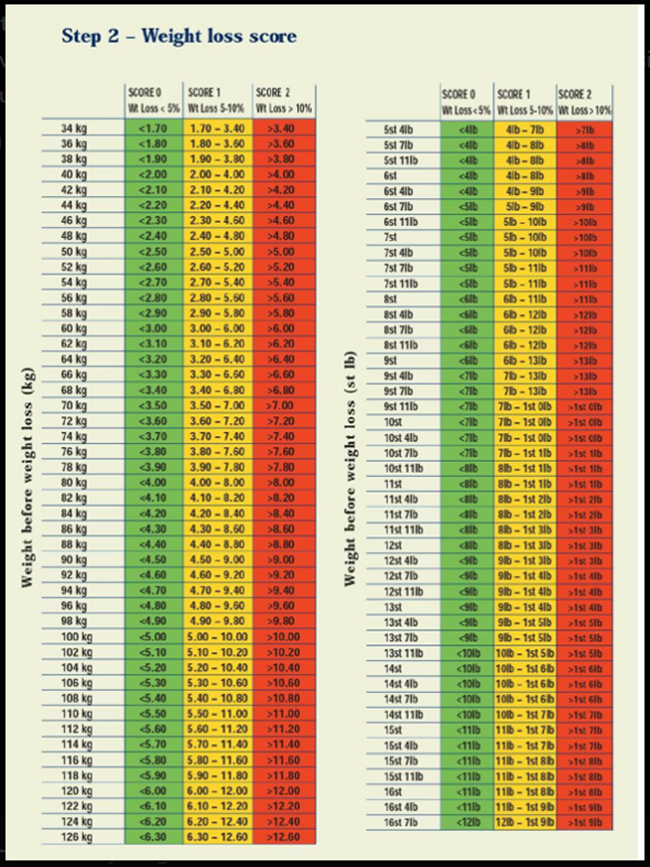
The NMC OSCE supporting documents have been updated, and one of the important changes occurs in the Nutritional Assessment Station. As part of the June 2026 update, the Step 2 Weight Loss Score Chart has been revised.
Although the scoring criteria remain the same, the format and presentation of the chart have changed. Students preparing for the NMC OSCE should familiarise themselves with the new chart to ensure accurate and efficient scoring during the OSCE.
Understanding MUST Step 2: Weight Loss Score
Step 2 of the MUST assessment requires students to calculate the patient’s unplanned weight loss over the last 3–6 months and identify a score accordingly.
The scoring criteria remain unchanged:
- Score 0: Weight loss less than 5%
- Score 1: Weight loss between 5% and 10%
- Score 2: Weight loss greater than 10%
The purpose of this step is to identify patients who may be at risk of malnutrition due to recent weight loss.
What Has Changed in the June 2026 Update?
| Details | Previous Chart | New Chart |
| Main change | The chart was organised according to the patient’s current weight. | The chart is now based on the patient’s weight before weight loss. |
| How to use | Students needed to locate the patient’s current weight and then identify the corresponding weight-loss range to determine the score. | Instead of focusing on current weight, students identify the patient’s weight before weight loss and then compare the amount of weight lost against the chart. |
The updated chart provides:
- Weight before weight loss in kilograms (kg)
- Weight before weight loss in stones and pounds (st lb)
- Direct weight-loss ranges for Scores 0, 1, and 2
This format allows students to identify the correct score more quickly and efficiently.
Why Was the Chart Updated?
The update appears to improve usability and reduce calculation errors by presenting weight-loss values in a more straightforward format.
Benefits of the new chart include:
- Easier understanding during the NMC OSCE
- Faster identification of the correct score
- Reduced risk of calculating an incorrect weight range
- Improved consistency when applying MUST scoring principles
The scoring method itself has not changed. Students are still expected to:
- Gather accurate weight information
- Calculate weight loss correctly
- Use the chart appropriately
- Identify the correct MUST score
- Document findings clearly
However, students should ensure they are using the latest June 2026 chart during their preparation. Using outdated supporting documents may lead to confusion when practicing Nutritional assessment station.

Tips for NMC OSCE Success
When completing the nutritional assessment station:
1. Read the scenario carefully.
Identify the patient’s previous weight and current weight before starting calculations.
2. Calculate Weight Loss Correctly
Always subtract the current weight from the previous weight.
3. Use the Updated Chart
Refer to the new weight-before-weight-loss chart rather than older versions.
4. Verbalise Your Assessment
Explain your scoring clearly to the assessor.
5. Document Accurately
Record the MUST score neatly and legibly.
2. Anti-embolism stockings Supporting Document Update
The June 2026 supporting documents now include clearer guidance regarding the selection and measurement of anti-embolism stockings.
Key Measurement Guidance
Candidates should understand the correct measurements required when selecting stocking size:
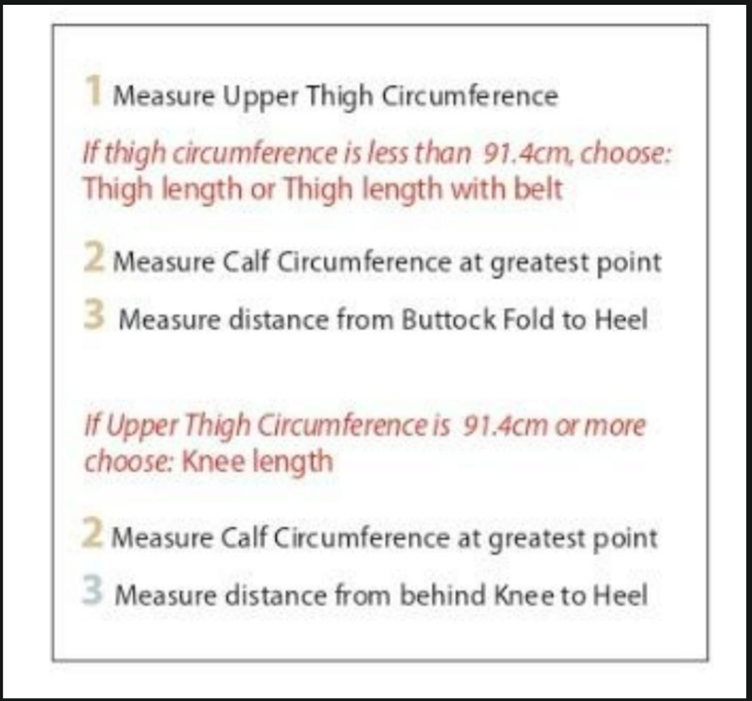
If Upper Thigh Circumference Is Less Than 91.4 cm
Measure:
- Upper thigh circumference
- Calf circumference at the greatest point
- Distance from buttock fold to heel
The appropriate stocking selection is
- Thigh Length or Thigh Length with Belt
If Upper Thigh Circumference Is 91.4 cm or More
Measure:
- Upper thigh circumference
- Calf circumference at the greatest point
- Distance from behind the knee to heel
The appropriate stocking selection is:
- Knee Length
Why This Matters
Students may be required to interpret supporting documentation correctly when assessing the size of stockings. Accurate measurements help ensure the correct stockings is selected, promoting patient safety and comfort.
OSCE Tip:
When completing measurements:
- Read supporting documents carefully.
- Follow the measurement sequence exactly as outlined.
- Verbalise your rationale when selecting stockings.
- Document measurements accurately.
3. DVT scenario of Assessment Station Update
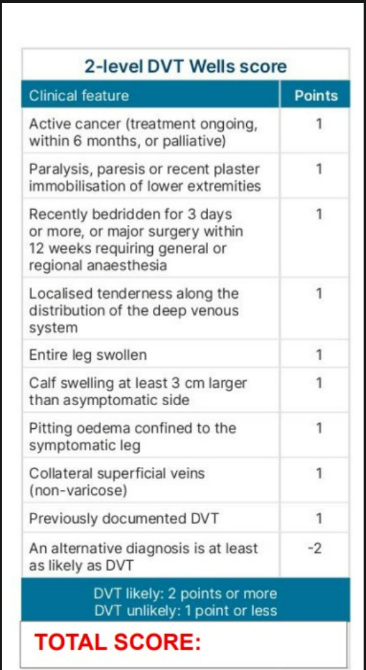
Another useful addition to the supporting documents is the 2-level DVT Wells Score total column on the chart. The Wells Score is an evidence-based clinical tool used to assess the likelihood of Deep Vein Thrombosis (DVT).
The clinical criteria and scoring system remain unchanged. However, a Total Score section has now been added to the chart, allowing candidates to record and calculate the final Wells Score more easily during the assessment.
Why Is This Helpful?
The addition of the Total Score section improves usability and supports more accurate documentation during the OSCE. It allows candidates to:
- Add scores more efficiently.
- Reduce the risk of calculation errors.
- Document findings in a clear and organised manner.
- Make quicker clinical decisions based on the final score.
At Mentor Merlin, we continuously monitor the latest NMC OSCE updates to ensure our students are prepared with the most current guidance and supporting documents. The June 2026 supporting document updates have already been incorporated into our teaching materials, practice sessions, and mock OSCE scenarios. Our mentors will guide students through every update, explain the rationale behind each change, and provide hands-on practice to ensure confidence on exam day. By training with the latest resources, you can approach your NMC OSCE with confidence and avoid confusion on exam day.
By preparing with the latest supporting documents and current OSCE guidance, students can avoid confusion, improve accuracy, and approach their examination with confidence.
Know more
Why Wait? Just Merlin It!
Free Consultation – Chat now with a Mentor.