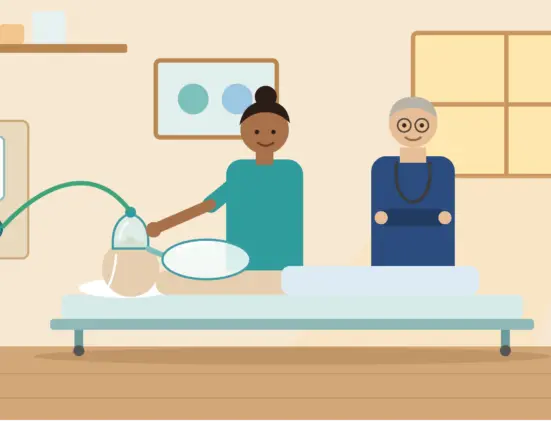


A patient who recognised you this morning may seem frightened, withdrawn or convinced they are somewhere else by evening. This Nurse Guide to communicating with delirium patients goes beyond finding the right words: it covers noticing an acute change, protecting safety and helping a person feel secure while the clinical team investigates the cause. Delirium can develop quickly and fluctuate during a shift. It may be especially easy to miss when a patient becomes unusually quiet rather than agitated. International nurses preparing for UK practice need a calm, person-centred approach that works alongside prompt assessment and escalation. This guide explains what to say, what to observe, how to involve families and how to make communication part of safe care. It also shows how these skills connect with the NMC Code and clinical scenarios you may practise in Mentor Merlin’s NMC OSCE and CBT preparation programmes.
What is delirium, and why does communication matter?
Delirium is an acute disturbance in attention and awareness, often with changes in thinking, perception or behaviour. It commonly develops over hours or days and varies throughout the day. It may follow infection, surgery, pain, dehydration, medication effects, constipation, urinary retention or other illness. An urgent assessment is needed because the underlying cause may be treatable and time-sensitive. Risk is higher for some people, including older adults and people with existing cognitive impairment, but delirium should never be dismissed as a normal part of ageing.
Some patients become restless and repeatedly try to leave the bed. Others develop hypoactive delirium: they appear unusually sleepy, quiet or disengaged. A patient may experience hallucinations or misunderstand what staff are doing. Dementia usually develops over a longer period; delirium is typically a sudden change, and the two conditions can occur together. The crucial question is often: “Is this different from their usual self?” Family members and regular carers can help answer it.
Good communication can reduce distress and support cooperation with essential care. It does not replace clinical assessment, observations or treatment. For UK practice, consult the NICE guideline on delirium and follow your organisation’s current assessment and escalation procedures.
Recognise changes before choosing a communication strategy
Before deciding how to speak with someone, check what has changed. Notice whether they can focus on a question, follow a simple instruction or stay engaged long enough to answer. Ask about their usual cognition, hearing, vision, sleep and communication needs. Review the timing of any new confusion, reduced alertness, altered behaviour or distress. A sudden change should be reported promptly, even when observations initially appear reassuring.
Consider immediate risks: a patient may be too drowsy to eat safely, attempt to remove treatment equipment or be at risk of falls. Take and document observations according to local policy, including vital signs and a structured deterioration score where appropriate. A trained clinician may use a recognised delirium assessment tool, such as the 4AT, as required by local guidance. A screening score supports assessment; it does not identify the cause or replace clinical judgement.
Ask the person what feels wrong: “Are you in pain?” or “Is anything frightening you?” Give time for an answer. Look for unmet needs that the person cannot easily describe, including thirst, discomfort, breathlessness, a full bladder, constipation or a missing hearing aid. Avoid assuming that an unfamiliar accent, limited English or a pre-existing diagnosis explains new confusion. If the patient is suddenly less responsive, has breathing difficulties or otherwise appears seriously unwell, seek urgent help under your service’s escalation policy.

Start with a calm introduction and a safe environment
Approach from the front where possible, introduce yourself on every encounter and use the name the person prefers. Say what you are doing before you touch them. Sit or stand at eye level, speak at a natural pace and keep your tone warm. A rushed approach can feel threatening to someone who is unsure where they are. For example: “Hello, Mr Khan. I’m Amira, your nurse. You’re in hospital. I’m here to check how you are feeling.”
Reduce avoidable noise and unnecessary interruptions. Make sure glasses and hearing aids are available and working, and check that lighting supports orientation without adding glare. Keep a clock and calendar visible when possible. During the day, support normal activity and daylight; at night, promote rest while maintaining required observations and care. Familiar objects can help, but ask the patient or family what is reassuring rather than assuming every item will be helpful.
Use one speaker at a time. State one request, pause, and check whether the person has understood. Replace “We need to complete several assessments and then move you” with “I will check your blood pressure now. Is that okay?” Communication must remain respectful even when the person cannot respond clearly. Do not talk about them as if they are not present. Explaining each step helps protect dignity and may reduce the fear that drives resistance to care.
Use short sentences, reassurance and gentle reorientation
Clear, simple language is usually easier to process than long explanations. Ask one question at a time and allow extra response time. Repeat important information in the same calm words when necessary. Offer limited choices that the person can understand: “Would you like water or tea?” rather than several questions at once. When the patient needs care, explain the immediate purpose: “I’m helping you sit up so you can breathe more comfortably.”
Gentle reorientation can help: remind the patient who you are, where they are and what will happen next. However, repeatedly correcting someone who is frightened may increase distress. If a patient says, “I need to get home to my children,” first respond to the feeling: “You sound worried about them.” Then offer truthful, brief information: “You’re in hospital, and I can help contact your family.” Do not argue, make promises you cannot keep or pretend that a frightening belief is true.
Check understanding rather than simply asking, “Do you understand?” A patient might agree without being able to follow the plan. Try: “Can you tell me what you think will happen next?” If the response shows uncertainty, simplify and try again. A patient’s ability to communicate may vary with fatigue, pain or time of day, so adapt throughout the shift. The goal is not to force perfect orientation; it is to keep the person informed, supported and as involved as possible.

Respond safely to fear, hallucinations and agitation
A patient experiencing delirium may see something that others cannot or mistake a routine procedure for a threat. Avoid dismissive phrases such as “There’s nothing there” or “You are being difficult.” Instead, acknowledge the emotion without confirming the perception: “That sounds frightening. I cannot see it, but I can stay with you while we make this room feel safer.” Ask what might help, reduce stimulation and check for pain, illness, medication effects or other possible triggers.
Keep your posture open, allow personal space and ensure the patient has a clear, safe route if they are walking. Do not crowd them or escalate a disagreement over facts. If agitation threatens immediate safety, summon support and follow local de-escalation and emergency policies. Physical restraint or medication should not be treated as a routine communication shortcut. Any restrictive intervention requires appropriate clinical and legal justification, the least restrictive approach, monitoring and documentation under local policy.
Safety includes the quieter patient. Someone who looks calm but is unusually drowsy may not call for help, drink enough or participate in care. Continue checking their comfort, alertness and basic needs. If the person’s condition changes or the communication approach is not working, stop, reassess and escalate. Compassionate words are valuable, but they must sit alongside timely clinical action.

Make care person-centred through family and carer involvement
Relatives and familiar carers may recognise an acute change sooner than staff who have just met the patient. Ask: “What is this person normally like?” and “What helps when they are upset?” They may know the patient’s preferred language, daily routine, cultural practices, hearing needs or familiar ways of expressing pain. Record useful information and share it with the team so that support remains consistent across shifts.
Invite family involvement where the patient wishes and where it is appropriate. A familiar voice, brief visit or reassuring phone call may help, but do not assume a visitor will always reduce distress. Ask the patient about their preferences whenever possible and observe their response. Explain the situation in accessible language, without presenting delirium as a permanent diagnosis or predicting recovery for a specific person.
Protect confidentiality. The amount of information you may share depends on consent, capacity, best interests, professional guidance and local policy. Families can provide important information even when staff cannot disclose every clinical detail. For a patient who uses another language, arrange a qualified interpreter for important clinical conversations and consent discussions. Family members can provide comfort and context, but should not automatically replace professional interpretation for complex or sensitive decisions.
Support consent, capacity and dignity during delirium
Delirium does not automatically mean a patient lacks capacity for every decision. Ability can fluctuate, and capacity is decision-specific and time-specific. Start by supporting the person to decide: use plain language, remove communication barriers, offer an interpreter or sensory aid, and choose a quieter time if the decision can safely wait. Ask the person to explain the choice in their own words rather than relying on a yes-or-no response.
If you have concerns about capacity for a particular decision, follow the applicable law and your organisation’s policy, including appropriate assessment and documentation. In England and Wales, the Mental Capacity Act 2005 guidance sets out principles such as presuming capacity unless established otherwise and taking practicable steps to support decision-making. Legal frameworks differ across the UK, so use local guidance for your setting. If a decision cannot be delayed and the person lacks capacity, the responsible team must act within the relevant legal framework and consider the least restrictive option.
Even where a patient cannot make a particular decision, speak to them about what you are doing, listen to their preferences and preserve privacy. Ask before personal care, explain any necessary assistance and avoid discussing sensitive details in a public area. The NMC Code requires nurses to prioritise people, practise effectively, preserve safety and promote professionalism and trust. These duties remain central when communication is difficult.

Build patient safety into every conversation
Communication should lead to practical safety actions. If a patient says they need the toilet, check whether they need assistance rather than simply telling them to stay in bed. If they try to leave, assess whether they are uncomfortable, disorientated or seeking someone familiar. Keep required items within reach, check the environment for trip hazards and follow the individual falls prevention plan. Do not assume that a raised bedrail or repeated warning is enough to prevent harm.
Continue the clinical investigation while providing reassurance. Escalate suspected infection, dehydration, medication-related problems, hypoxia or other concerns to the appropriate clinician. Address pain and basic needs within your role and prescribed care plan. Support oral fluids, nutrition, mobility and sleep when clinically safe, in line with the multidisciplinary plan. A new change in consciousness or other serious deterioration needs urgent review, not only a quieter environment.
Document observable facts: what the patient said or did, when it happened, changes from baseline, assessment findings, safety concerns, actions taken and who was informed. Avoid labels such as “confused and aggressive” without context. A more useful record might say: “At 19:30, patient attempted to get out of bed, stated they needed to collect their child, and appeared unable to identify the ward; assisted to a safe position, pain assessed, observations recorded and nurse in charge informed.” Objective documentation helps the next team member understand the patient and the risk.
Hand over clearly and work with the multidisciplinary team
Delirium can fluctuate, so a single assessment does not tell the whole story. During handover, explain when the change began, what the person is usually like, whether symptoms vary, relevant observations, possible causes, interventions tried and outstanding concerns. State which communication approach helps: a preferred name, working hearing aid, interpreter, familiar visitor or short explanations before care. Include any risks around falls, nutrition, treatment devices or decision-making.
A structured format such as SBAR (Situation, Background, Assessment, Recommendation) can make an urgent escalation clearer. For example: “This patient has become newly drowsy since lunchtime. Their family says they were alert this morning. I have checked observations and glucose according to policy, and I am concerned about an acute change. Please review them now.” Adapt the details to what you have actually assessed; never imply that tests were completed if they were not.
Medical staff, pharmacists, therapists, healthcare support workers and family carers may each contribute to assessment or recovery. Clear communication between them helps avoid repeated distressing questions and missed changes. Nurses should continue to reassess after an intervention and report whether the patient is improving, deteriorating or still fluctuating. Useful handover is not simply “patient confused”; it describes the person, the change and the action needed next.

A practical example: from distress to safer care
Imagine a patient who had surgery yesterday suddenly tries to climb out of bed at 21:00. They say staff are keeping them prisoner. Rather than correcting them sharply, the nurse approaches at eye level: “I’m Priya, your nurse. You seem frightened. I’m here to help.” She checks for immediate danger, asks whether the patient is in pain or needs the toilet, and calls a colleague for support if necessary. She keeps the explanation short: “You had an operation. You are in hospital tonight. Let us make you comfortable.”
The nurse then checks observations and other relevant factors within local policy, looks for a change from baseline and escalates the sudden behaviour change. A family member confirms the patient is usually fully orientated and says the patient finds a familiar voice reassuring. With appropriate permission, the team offers a phone call. The nurse documents the patient’s words, assessment, safety steps and clinical review request, then tells the next shift which approach helped.
This example is not a fixed script or a diagnosis. The person might need urgent treatment, different communication support or a different safety plan. Its lesson is that empathy and escalation are not competing tasks. A calm response can make assessment possible, while clinical assessment ensures that reassurance does not hide a serious change.

Practise these skills for UK nursing and NMC exams
For nurses preparing for UK registration, delirium scenarios bring several skills together: recognising acute deterioration, communicating clearly, preserving dignity and escalating concerns. In an NMC OSCE scenario, practise introducing yourself, checking immediate safety, asking focused questions and explaining actions in everyday language. Where a station requires assessment or handover, make your reasoning visible without guessing a diagnosis. Always follow the current station instructions and marking guidance.
For NMC CBT preparation, revise the difference between delirium and longer-term cognitive decline, the significance of hypoactive symptoms, and the priorities of safe assessment and escalation. Use patient-centred reasoning: identify the most urgent risk, choose an appropriate next action and communicate the change accurately. Mentor Merlin’s NMC OSCE, NMC CBT and OET preparation programmes can support practice in clinical communication and UK nursing language. For related reading, explore our APIE care planning guide and Alzheimer’s and dementia CBT guide.
Conclusion: combine compassionate communication with prompt action
Communicating with patients experiencing delirium is about seeing the person behind the change in behaviour. Introduce yourself, listen for distress, use short explanations and involve families appropriately. At the same time, recognise that sudden confusion or withdrawal may signal illness: assess, document and escalate without delay. These habits protect dignity and support safer decisions across the team. If you are preparing for UK nursing practice, build confidence through scenario-based rehearsal and explore Mentor Merlin’s NMC OSCE, NMC CBT and OET preparation programmes. Check current NICE, NMC and local guidance whenever you apply these strategies in practice.
Frequently asked questions
1. What should a nurse say to a patient experiencing delirium?
Introduce yourself, use the person’s preferred name and explain one action at a time. Speak calmly, allow time to respond and acknowledge fear without arguing about a mistaken belief. For example: “You seem worried. I’m your nurse, and I’m here to help you feel safe.” Assess and escalate any acute change.
2. Should nurses keep correcting a disorientated patient?
Offer brief, gentle reminders about where the person is and what is happening, but do not repeatedly challenge a belief if doing so increases distress. Respond to the feeling first, give truthful reassurance and assess unmet needs. Reorientation is one useful approach, not a substitute for investigating sudden confusion.
3. How is delirium different from dementia?
Delirium usually begins suddenly and fluctuates, with changes in attention and awareness. Dementia typically develops more gradually, although a person with dementia can also develop delirium. Ask family or carers about the patient’s usual functioning. A new change needs prompt assessment rather than being attributed automatically to an existing diagnosis.
4. Can a patient with delirium consent to treatment?
Possibly. Delirium does not remove capacity for every decision, and a person’s abilities may vary over time. Support communication, consider the specific decision and follow the applicable legal and organisational framework when assessing capacity. Continue to explain care and respect preferences even if a particular decision must be made through a formal process.
5. When should a nurse escalate suspected delirium?
Report a new or fluctuating change in attention, behaviour or alertness promptly, including quiet withdrawal. Seek urgent help for serious deterioration, reduced responsiveness or other immediate concerns according to local policy. Share when the change started, baseline cognition, observations, safety risks and actions already taken.
Read our recent blog – “7 Steps for Managing Nursing Staff Shortages Safely” – to ensure your journey stays on track.
Why Wait? Just Merlin It!
Free Consultation – Chat now with a Mentor.