

Preparing for the NMC OSCE wound dressing using ANTT station can feel stressful, especially for international nurses who want to demonstrate both safe clinical practice and strong communication in a short exam. This station is not only about applying a dressing correctly. It also tests your understanding of asepsis, patient safety, infection prevention, professional behaviour, and your ability to work in a calm, structured way.
In the OSCE, small details matter. Candidates can lose marks for breaking sterility, touching key parts unnecessarily, poor explanation, or forgetting patient comfort and health education. The good news is that with the right approach, this station becomes manageable. If you understand the principles of Aseptic Non-Touch Technique (ANTT) and practise a clear step-by-step method, you can perform with more confidence and accuracy.
This guide explains the best practices in NMC OSCE wound dressing using ANTT, highlights common mistakes to avoid, and shares practical exam tips for success. It is designed for nurses preparing for UK registration and aligns with the safe, professional approach expected in OSCE settings. If you are building confidence for your exam, Mentor Merlin’s NMC OSCE preparation programmes can help you practise high-scoring techniques in a structured way.
What Is the NMC OSCE Wound Dressing Station?
The wound dressing station in the NMC OSCE assesses whether you can perform wound care safely and systematically while protecting the patient from infection. Although the exact scenario may vary, the core expectation stays the same: you must use ANTT correctly, maintain a sterile field, protect key parts, communicate clearly, and complete the procedure with professionalism.
In simple terms, the examiner wants to see that you understand how to change a dressing without contaminating the wound or sterile equipment. You also need to show compassionate care. That means introducing yourself, explaining the procedure, gaining consent, checking comfort, managing dignity, applying sterile dressing and offering health education before you finish.
This station reflects real UK nursing practice, where wound care must be evidence-based and safe. The principles also connect closely with the NMC Code, especially preserving safety, practising effectively, and prioritising people. So, when you prepare for this OSCE station, you are not only learning an exam marking criteria. You are demonstrating the standard expected of a registered nurse in the UK.
Why ANTT Matters in Wound Dressing
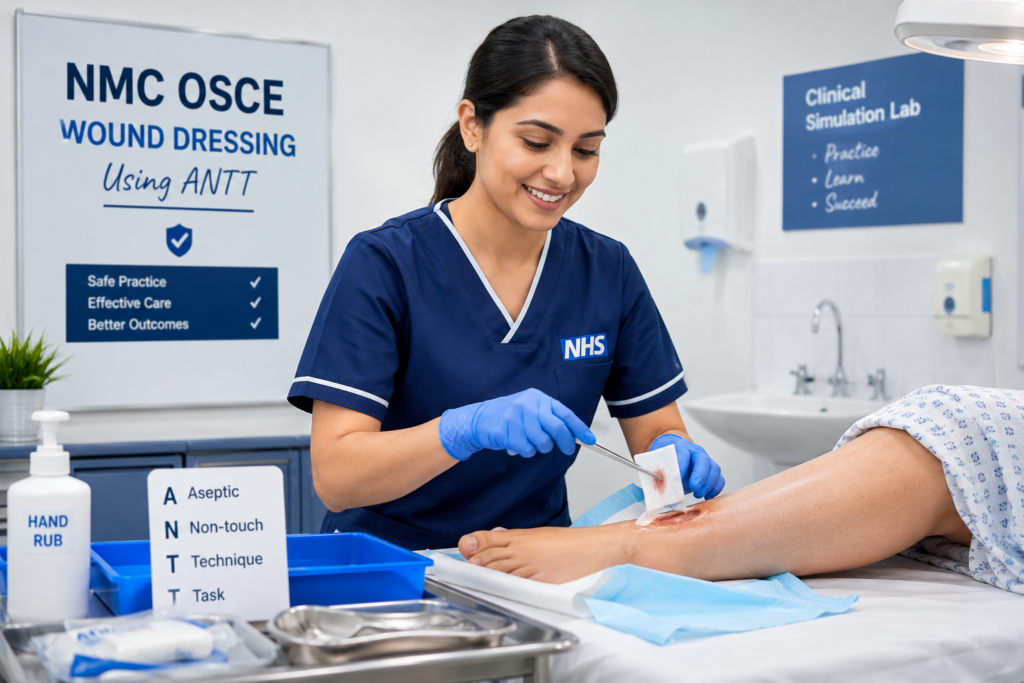
Aseptic Non-Touch Technique is a method used to prevent harmful microorganisms from entering susceptible sites such as wounds. In wound dressing, ANTT helps you keep the wound and key sterile items free from contamination. The principle is simple but powerful: identify the key parts and key sites, then avoid touching them directly whenever possible.
For OSCE candidates, ANTT is essential because it influences nearly every step of the station. Cleaning the trolley, organising sterile and non-sterile items correctly, opening packs safely, pouring saline carefully, handling sterile gloves correctly, and avoiding contact with the wound are all part of this process. Even if your communication is strong, contamination errors can reduce your score significantly.
In practice, ANTT also shows that you understand infection prevention and control, which is a major part of NHS care standards. The NHS approach to infection prevention places strong emphasis on aseptic practice, hand hygiene, and reducing avoidable harm. In the OSCE, using ANTT shows the examiner that you are thinking like a safe practitioner, not just memorising steps.
Articles Commonly Required for the Procedure
While OSCE centres may vary slightly, candidates are usually expected to recognise and use the correct articles for wound dressing using ANTT. Common items include:
- Wound care pack
- 0.9% sodium chloride sachet
- Disinfectant wipes
- Chlorhexidine wipes if provided and appropriate for the scenario
- Sterile dressing
- Alcohol hand rub
- Sterile gloves
- Apron and other personal protective equipment if indicated
- Clinical waste bag
- Additional forceps if supplied
One important OSCE tip is to check the integrity and expiry of any sterile pack before use. If a pack is damaged, wet, or expired, it should not be used. This reflects safe professional judgement. If you are unfamiliar with a dressing pack in real practice, the correct approach is to seek support and act within your competence. That principle matters in UK nursing and is often discussed in OSCE preparation.
If you want broader guidance on exam stations and article handling, Mentor Merlin’s OSCE study guides and tips can support your revision plan.
Step-by-Step Best Practices in NMC OSCE Wound Dressing Using ANTT
1. Prepare yourself and the environment
Begin with hand hygiene and ensure the environment is ready. Clean the trolley using appropriate disinfectant wipes and allow it to dry if needed. Arrange items logically so you do not have to search for equipment during the procedure. Good preparation reduces the risk of contamination and helps you appear calm and organised.
In the OSCE, examiners notice whether you separate clean and sterile items properly. Keep your field tidy. Avoid overcrowding the trolley. If you prepare the area well at the beginning, the rest of the procedure becomes smoother.
2. Approach the patient professionally
Introduce yourself, confirm the patient’s identity according to OSCE expectations, explain the procedure clearly, and gain consent. Check for pain and patient comfort. Ensure privacy and position the patient so the wound is accessible while dignity is maintained. This is a key part of patient-centred care and should never be rushed.
Your language should be simple and reassuring. For example, explain that you are going to change the dressing using a sterile technique to reduce infection risk. During the OSCE, this communication can help demonstrate empathy and professionalism.
3. Remove the old dressing carefully
Remove the old dressing gently to avoid pain or skin trauma. Observe the wound and old dressing for drainage, odour, bleeding, or signs of infection. In many OSCE stations, you may need to verbalise what you would assess, such as wound size, exudate, colour, peri-wound skin condition, and patient discomfort. Dispose of the soiled dressing safely into clinical waste.
If the patient appears uncomfortable, acknowledge it and respond appropriately. Safe care is not only technical. It also includes attention to pain and dignity.
4. Prepare the sterile field correctly
Open the wound care pack carefully without contaminating the contents. Create a sterile field according to the pack design. Transfer sterile items safely and pour saline into the sterile area without touching the sterile container or field. If a sterile dressing needs to be opened, do so without touching the key part that will contact the wound.
This stage is where many candidates make avoidable mistakes. Do not reach across the sterile field. Do not let non-sterile sleeves or hands touch sterile items. Keep movements deliberate and controlled.
5. Use sterile gloves appropriately
Put on sterile gloves using the correct technique. Once gloved, remember that being sterile does not give permission to touch everything freely. ANTT still requires you to protect key parts and key sites. Only handle what is necessary, and avoid touching non-sterile surfaces. If contamination occurs, you should acknowledge it and replace gloves or equipment as required.
6. Clean the wound using ANTT principles
Clean the wound according to the station guidance, usually using sterile saline and sterile swabs from clean to less clean areas. Avoid going back over the wound with the same swab. Use each swab once, then discard it. The aim is to avoid introducing microorganisms into the wound while removing visible debris or exudate safely.
Keep in mind that OSCE technique may focus more on the principle than on advanced wound management decisions. Show a safe sequence, protect the wound, and verbalise your observations where appropriate. If the scenario provides specific wipes or products, use them only as intended within the exam framework.
7. Apply the new dressing without contaminating it
Apply the new sterile dressing carefully so that the part touching the wound remains uncontaminated. Secure it comfortably and neatly. The dressing should protect the wound, support healing, and remain appropriately positioned. Avoid excessive handling and ensure that the patient is comfortable once it is in place.
In real wound care, dressing choice depends on wound type, exudate, and clinical assessment. In the OSCE, however, your main goal is to demonstrate a safe application technique and understanding of asepsis.
8. Dispose of equipment safely and complete aftercare
Once the new dressing is secure, remove gloves and apron appropriately, perform hand hygiene, clear the trolley, and dispose of waste according to infection control policy. Make sure the patient is left safe and comfortable, with the call bell within reach if relevant.
Many candidates focus heavily on the dressing itself and forget to complete the ending properly. In OSCE marking, the finish matters. A safe conclusion shows professional completeness.
9. Give health education and document clearly
Before finishing, provide brief health education. Tell the patient to report pain, redness, swelling, increased discharge, bleeding, fever, or dressing problems. Advise them not to touch or remove the dressing unless instructed. Depending on the scenario, you may also mention keeping the dressing dry and following review instructions.
Finally, conclude to the assessor the patient’s response and any concerns escalated. Complete the station in a professional manner.

Common Mistakes Candidates Make in the Wound Dressing Station
Knowing what not to do can improve your OSCE performance significantly. Common mistakes include failing to clean the trolley, breaking the sterile field, touching key parts directly, poor glove technique, forgetting consent, skipping wound assessment comments, and not giving health education. Some candidates also become so focused on speed that they appear mechanical or abrupt with the patient.
Another frequent issue is poor sequencing. For example, candidates may open items in the wrong order, mix sterile and non-sterile equipment, or dispose of waste late. These actions create confusion and increase contamination risk. The examiner is looking for a clear, safe flow.
To reduce these errors, practise the station repeatedly using a verbal checklist. Mentor Merlin often emphasises memorable sequences such as cleaning the trolley, arranging articles, preparing the sterile field, transferring supplies correctly, donning sterile gloves, cleaning the wound, applying the dressing, disposing of equipment, and giving health education. Repetition helps you stay composed in the exam.
How to Score Better in the NMC OSCE Wound Dressing Using ANTT
To score well, think beyond the task itself. The strongest candidates combine technical skill with confident communication and exam awareness. Speak clearly, but do not overtalk. Verbalise important observations and actions when needed. If you are assessing the wound, say what you are looking for. If you are protecting sterility, show it through deliberate movements.
Practising under timed conditions is especially helpful. The OSCE can feel very different when the clock is running, so train yourself to complete the sequence in a calm, efficient way. Use simulation where possible. Record yourself or practise with feedback from an OSCE trainer.
It also helps to revise the wider context of wound care and UK clinical expectations. Reading structured resources from Mentor Merlin’s NMC OSCE blog section can strengthen your understanding of both technique and examiner expectations.
Clinical Reasoning Behind Safe Wound Dressing Practice
Even though the OSCE is an exam, good performance depends on clinical reasoning. A wound is a vulnerable site. If microorganisms enter it during dressing change, healing can be delayed, and infection risk can increase. That is why ANTT is so important. Every action should support cleanliness, safety, and gentle handling.
Dressings also serve important functions. Depending on the wound, they may protect from contamination, absorb exudate, support a moist healing environment, or shield fragile tissue from trauma. In real practice, dressing choice depends on wound type and clinical assessment. For OSCE candidates, understanding this broader purpose can improve the way you explain your care and demonstrate professional judgement.
If you need a broader view of UK nursing pathways while preparing for clinical exams, you may also find the UK health policy context useful, especially when understanding standards in healthcare delivery and patient safety.
How Mentor Merlin Can Help You Prepare
For many international nurses, the most difficult part of OSCE preparation is turning theory into exam-ready performance. Reading steps is helpful, but it is not the same as demonstrating them under pressure. That is where structured support can make a real difference.
Mentor Merlin supports nurses preparing for UK registration through focused training for the NMC OSCE, as well as OET and CBT preparation programmes. If you want guided practice, station-based coaching, and feedback on your technique, Mentor Merlin’s programmes can help you build confidence for high-stakes clinical assessment.
Whether you are struggling with wound dressing by ANTT principles or patient communication, the goal is the same: to help you become safe, competent, and exam-ready for your journey toward NHS practice in the UK.

Conclusion
Mastering the NMC OSCE wound dressing using ANTT station requires more than memorising a list of steps. You need to combine aseptic technique, structured practice, patient-centred communication, wound observation, and safe completion of care. When you understand why each step matters, it becomes easier to perform the station with confidence.
If you are preparing for UK nurse registration, now is the time to strengthen your practical approach. Explore Mentor Merlin’s OSCE, OET, and CBT preparation programmes to build exam confidence and move closer to your NHS career goals.
Frequently Asked Questions
What does ANTT mean in the NMC OSCE?
ANTT stands for Aseptic Non-Touch Technique. In the NMC OSCE, it means protecting key parts and key sites during procedures such as wound dressing to reduce contamination and infection risk.
What are the most common mistakes in the wound dressing station?
Common mistakes include breaking the sterile field, touching sterile items unnecessarily, poor communication, forgetting patient consent, weak wound assessment comments, and not giving health education or a conclusion at the end.
Do I need to explain wound assessment during the OSCE?
Yes, address the wound before starting dressing. You should verbalise relevant observations such as wound appearance, exudate, odour, bleeding, surrounding skin condition, and any signs that may need escalation, while maintaining the flow of the procedure.
How can I improve my NMC OSCE wound dressing performance?
Practise the sequence repeatedly, focus on ANTT principles, use timed simulation, improve your communication, and get feedback from experienced OSCE trainers. Structured preparation can improve both confidence and accuracy.
Can Mentor Merlin help with NMC OSCE preparation?
Yes. Mentor Merlin offers preparation support for NMC OSCE, OET, and CBT candidates, helping international nurses strengthen clinical technique, communication, and exam confidence for UK registration.

Read our detailed blog – “4 Powerful NMC OSCE Preparation Secrets for Successful Nurses” – to ensure your journey stays on track.
Why Wait? Just Merlin It!
Free Consultation – Chat now with a Mentor.