


The NMC OSCE Pre Operative Check Station is an important skill station in the NMC OSCE (Objective Structured Clinical Examination) that will be implemented from 23rd February, 2026. This station assesses students ability to ensure patient safety before surgery. Students are expected to follow a systematic approach, communicate effectively, complete all required safety checks and document accurately.
Understanding the structure, expectations, and key steps of this station can significantly improve your performance and help you achieve the station successfully.
Purpose of the NMC OSCE Pre Operative Check Station
The main aim of this station is to ensure that the patient is prepared for surgery and that all potential problems are identified. The examiner assesses your ability to:

- Maintain patient safety
- Follow NMC standards
- Perform systematic checks
- Communicate effectively with the patient
- Complete documentation accurately
This reflects real clinical practice, where pre-operative checks help prevent any risk, allergic reactions, and any other complications.
Key Steps in the Pre-Operative Check
| Check List | Information |
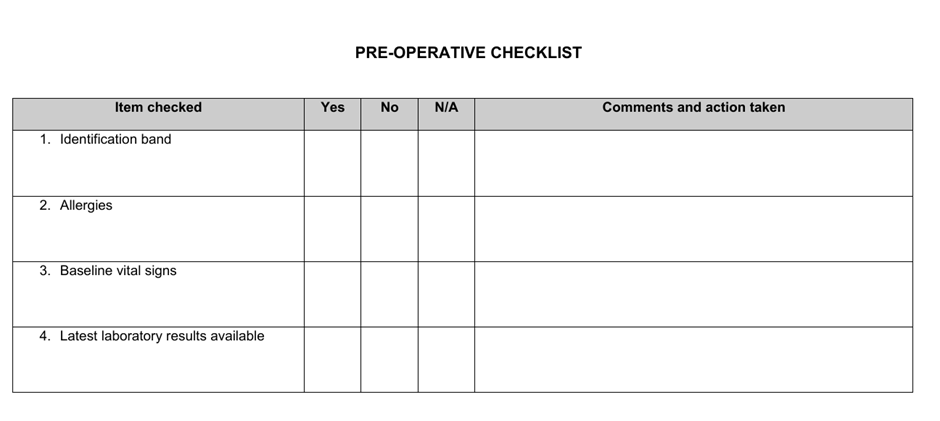
| Introduction and Patient Identification | – Introduce yourself – Patient consent to proceed & Rationale for the procedure – Patient’s identity using at least two identifiers |
| Allergy Status Check | Any known allergies, reaction and confirm that with an allergy wristband |
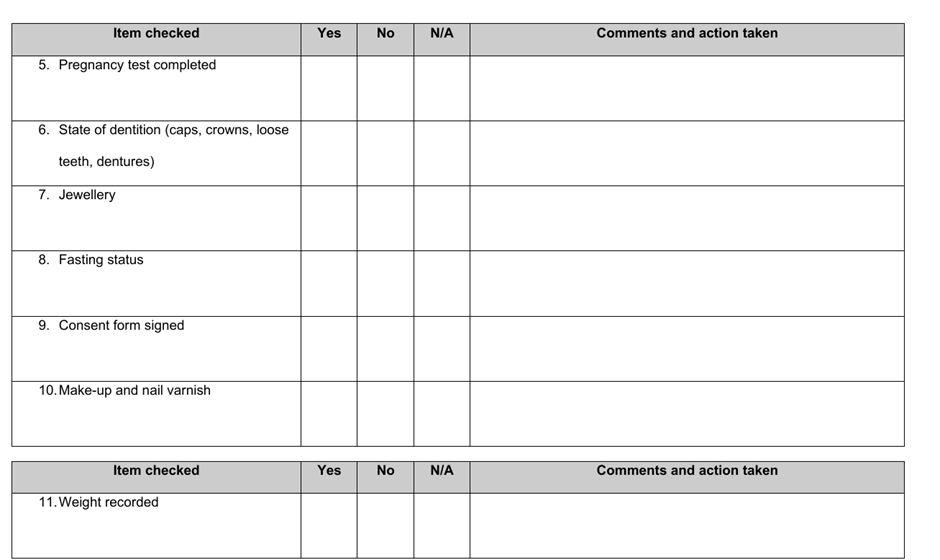
| State of dentition | Check for any cap, crown, loose teeth or dentures |
| Jewellery | Removal of jewellery (If any) or securing if necessary |
| Fasting Status Confirmation | Verify the patient’s fasting status by asking about their last food and fluid intake |
| Consent Confirmation | Ensure the consent form is signed, accurate, and complete |
| Consent Verification | You must also confirm that the patient understands the procedure |
| Makeup and nail varnish | Ensure Removal of makeup and nail varnish |
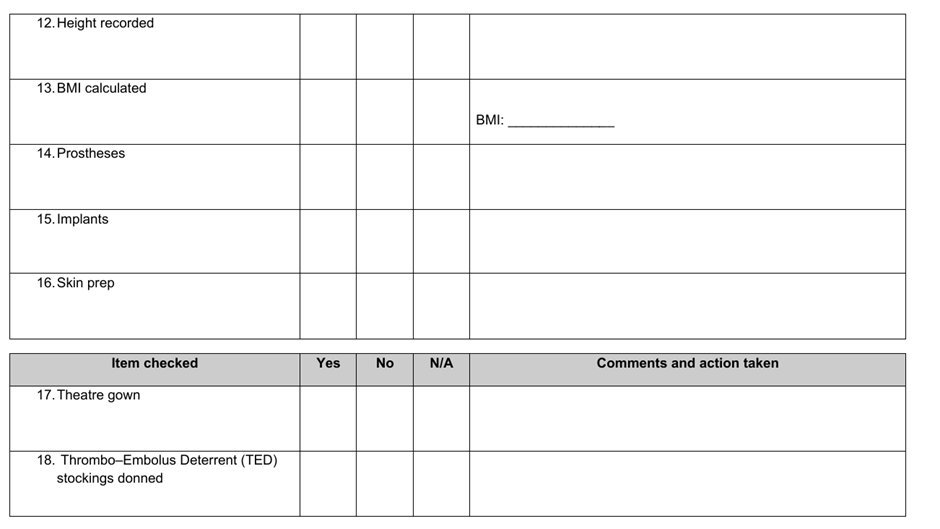
| BMI calculation | Calculate the BMI of the patient accurately |
| Prostheses | Check for any prostheses like glasses, hearing aids, etc., present |
| Implants or metal work | Check for any implant, such as a pacemaker, metal implant, etc., whether or not |
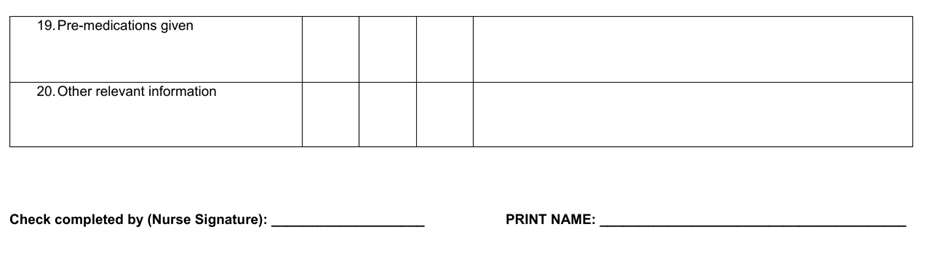
| Theatre gown | Check the theatre gown is worn appropriately |
| Any other relevant information | – Check any other relevant information, such as whether laboratory reports are completed – Skin preparation (Part preparation) – TED stockings - Pre- Op medications. |
| Documentation | You must record findings clearly, note any concerns, and complete the checklist appropriately. |
| Communication and Patient-Centred Care | – Communicate clearly with the patient – Explain each step, and maintain dignity and privacy – Check if the patient has any questions or concerns |
Common Mistakes to Avoid
Students make some common errors, such as:
- Not confirming patient identity correctly
- Forgot to check allergy status or fasting checks
- Inaccurate documentation
- Inappropriate communication with the patient
- Verifying consent verification
Sample Pre-Operative Surgical Safety Checklist
Follow the points for Success
- Adhere to the systematic checklist approach
- Use clear and simple language while communicating
- Prioritise patient safety and dignity
- Confirm and document accurately
- Maintain professional behaviour throughout
Mock practice and familiarity with NMC OSCE marking criteria will help to build confidence and accuracy.
By following a structured approach, verifying essential information, and demonstrating effective communication, students can successfully meet the station’s requirements. Mastering these skills not only helps you pass the NMC OSCE but also prepares you for safe nursing practice.
Learn everything you need for OSCE by reading the Merlin Book of OSCE – Visit Now
NMC OSCE for Nurses Everything You Need to Know in 2026 – Click Here
For any NMC OSCE-related queries and training, chat with us!