


Preparing for the NMC CBT Part B Clinical exam requires much more than basic medical knowledge. It demands strong clinical judgment, strategic time management, and a thorough understanding of UK nursing standards and professional practice. The examination evaluates how you apply knowledge in realistic clinical scenarios, not just what you memorize. Understanding common mistakes candidates make and how to eliminate them is crucial for achieving success.
The NMC CBT Part B Clinical represents a critical gateway to UK nursing registration. This computerized examination assesses your ability to make safe, evidence-based clinical decisions that prioritize patient safety, dignity, and effective care delivery. Success requires preparation that goes beyond memorization, demands strategic thinking and practical application of clinical knowledge.
Table of Contents
Five Critical Mistakes to Avoid
1. Poor Time Management
The Challenge: Many candidates either rush through questions carelessly or spend excessive time on difficult items, leaving insufficient time for complete assessment.
Best Practice:Allocate approximately 1-2 minutes per question and immediately flag difficult items to revisit later. Reserve your final 15-20 minutes for review of flagged questions. Practice with online timers during preparation to develop rhythm and consistency.
2. Limited Practice with Scenario-Based Questions
The Challenge: Part B focuses exclusively on real-world clinical scenarios, not memorized facts. Candidates who study only theory struggle when encountering case-based questions requiring practical application.
Best Practice: Practice consistently with scenario-style mock tests. Focus on understanding reasoning behind each answer choice rather than memorizing options. Analyze why certain actions are safer or more appropriate than alternatives.
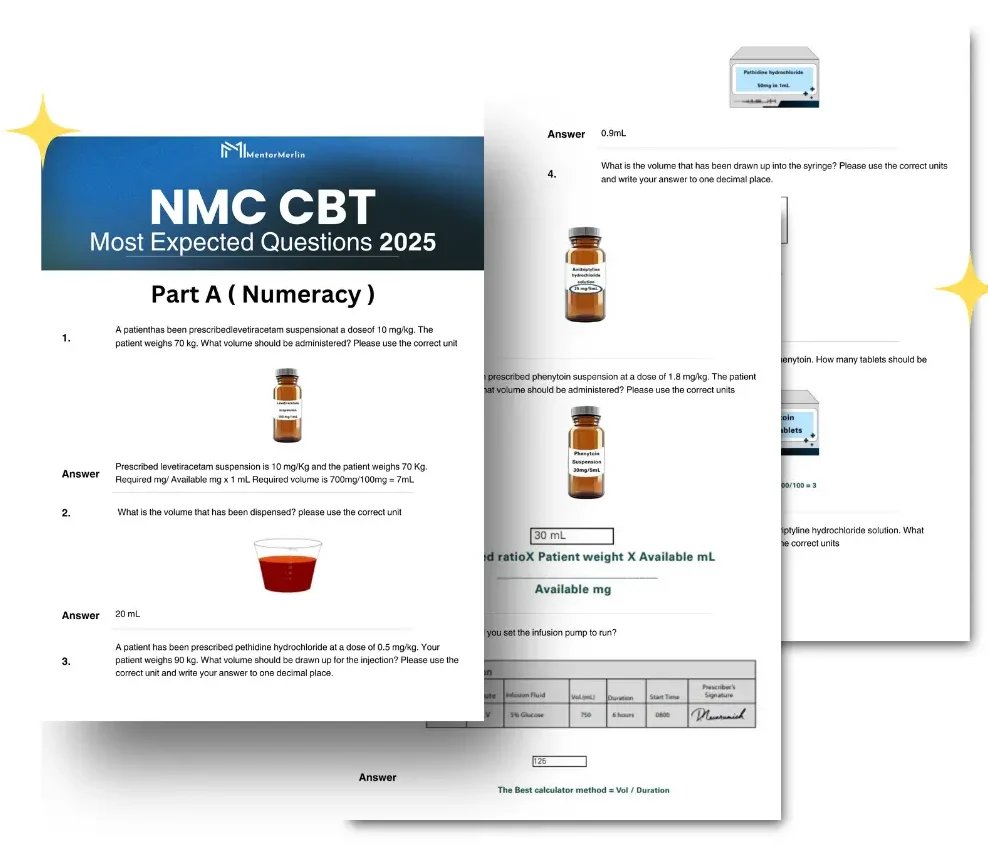
Download CBT Most Expected Questions 2025.
3. Ignoring the NMC Code and UK Guidelines
The Challenge: Almost every question is grounded in UK standards of care, including the NMC Code, NICE guidelines, and UK healthcare protocols. Disregarding these frameworks typically leads to incorrect answers.
Best Practice: Thoroughly familiarize yourself with the NMC Code and current NICE guidelines. When answering questions, think like a UK nurse – prioritize safety first, maintain patient dignity, deliver evidence-based care, and demonstrate professional accountability.
4. Overanalysing or Second-Guessing
The Challenge: Capable candidates often harm their performance through excessive overthinking. Your first instinct is frequently correct when you have studied appropriately and understand clinical principles. Changing answers based on doubt often results in selecting less appropriate options.
Best Practice: Trust your clinical judgment when your answer aligns with safe, evidence-based practice. Change responses only when you genuinely identify clear errors, not due to vague doubt.
5. Choosing Multiple “Right” Answers
The Challenge: Many questions present several reasonable answer options that appear clinically acceptable. However, only one answer perfectly matches UK clinical expectations and represents best practice.
Best Practice: Analyze each option carefully. Select the most comprehensive and least intrusive action that guarantees patient safety. The best answer typically represents the most appropriate first-line intervention.

Important Pointers for Success in NMC CBT Part B Clinical
1. Supervise Time Smartly
Maintain consistent pacing throughout the examination. Keep structured timing, practice with timers during preparation, and reserve final minutes for reviewing flagged questions.
2. Recognise the Exam Blueprint
Understand high-yield clinical areas most heavily tested, including infection control, medication safety, dementia care, and end-of-life support. Targeted preparation in these areas produces significantly better results.
3. Apply UK Clinical Judgment
Always approach questions from a UK nursing perspective. Ensure answers prioritize patient safety, demonstrate respect for patient dignity, and reflect collaborative healthcare practice.
4. Work Consistently
Use official NMC resources and high-quality mock examinations to familiarize yourself with question formats, examination pressure, and realistic time constraints. Consistent practice with authentic materials dramatically improves both knowledge retention and examination performance..
Final Thoughts
The NMC CBT Part B Clinical examination is not simply a test of memorized information. It fundamentally evaluates how you think and reason as a nurse. By understanding common mistakes, implementing strategic preparation methods, and focusing on scenario-based learning, you can develop the skills necessary for success.
Remember: This examination assesses how you apply knowledge to make safe, evidence-based clinical decisions. With focused preparation, strategic practice, and commitment to UK nursing principles, you can confidently pass your NMC CBT Part B Clinical examination in 2025 and achieve your goal of UK nursing registration.
Read our detailed blog – “Avoid These Common Pitfalls After the UK NMC CBT in 2025” – to ensure your journey stays on track.
Free Consultation – Chat now with a Mentor.