


Nurses working in the UK must understand how medicines can be supplied and administered safely. One important topic is Patient Group Directions (PGDs). They allow authorised healthcare professionals to supply or administer certain medicines to eligible patients without an individual prescription.
This topic is useful for nurses preparing for the Nursing and Midwifery Council (NMC) Test of Competence, including the Computer-Based Test (CBT).
In this guide, Mentor Merlin explains PGDs in simple English, including their meaning, key rules, medication administration and important CBT exam tips.
What is a Patient Group Direction (PGD)?
A Patient Group Direction (PGD) is a written legal instruction that allows authorised healthcare professionals to supply or administer specified medicines to a defined group of patients without an individual prescription.
A PGD explains:
- Which medicine can be supplied or administered.
- Which patients are eligible to receive it.
- The correct dose, route and frequency.
- Which patients must not receive the medicine.
- When to seek medical advice or refer a patient.
- What information must be recorded.
For example, an authorised nurse working in a vaccination clinic may use an approved PGD to administer a specific vaccine to an eligible patient.
However, the nurse must first assess the patient and check that they meet the PGD criteria.
Remember: A PGD is not a prescription. It does not allow a nurse to administer any medicine to any patient.
Why are PGDs used in nursing?
PGDs help eligible patients access certain treatments without unnecessary delays. They can also support consistent care in approved healthcare services.
Examples of services where PGDs may be used include:
- Vaccination services.
- Certain contraception services.
- Some community healthcare services.
- Other approved clinical services where a PGD is legally appropriate.
The medicine and service must be covered by an approved PGD. Not every medicine or clinical situation is suitable for this arrangement.
Who can use a PGD?
Only healthcare professionals whose registered professions are legally permitted to use PGDs can do so. They must also be appropriately authorised and competent.
Eligible professions can include nurses, midwives, pharmacists and paramedics, depending on the applicable legislation.
For nurses, the main requirements are:
- They must belong to a profession legally permitted to use the PGD.
- They must be authorised to work under that specific PGD.
- They must have the necessary training and competence.
- They must follow the approved instructions.
- They must maintain accurate records.
CBT tip: Being a registered nurse does not automatically authorise you to use every PGD.

Key rules of Patient Group Directions
1. Follow the approved PGD
A nurse must follow the instructions in the approved PGD. They cannot independently change the medicine, dose or route.
If the patient’s needs fall outside the PGD, the nurse must not proceed under that direction. Appropriate clinical advice should be obtained.
2. Check patient eligibility
Before administering a medicine, the nurse must assess the patient against the PGD’s inclusion and exclusion criteria.
- Inclusion criteria: Conditions a patient must meet to receive the medicine.
- Exclusion criteria: Conditions that prevent a patient from receiving the medicine under that PGD.
For example, a patient with an allergy listed as an exclusion criterion must not receive the medicine under that PGD.
Never assume that a patient is eligible simply because they have received the medicine before.
3. Check the medicine
Before administration, check the medicine name, strength, dose, route, expiry date and storage requirements. Confirm the permitted frequency and maximum dose stated in the PGD.
These checks help prevent medication errors and protect patient safety.
4. Recognise when a PGD is unsuitable
PGDs are not suitable for every clinical situation. They should not be used as a substitute for an individualised treatment plan when a patient’s needs require assessment and prescribing.
For example, a patient requiring complex treatment or frequent dose adjustments may need an individual prescription or another appropriate legal arrangement.
5. Maintain accurate records
After supplying or administering a medicine, document the care provided according to the PGD and local policy.
Records may include the patient’s details, medicine and dose, date and time, relevant assessment findings, the healthcare professional’s details and any follow-up advice.
If the medicine is not administered, record the reason and actions taken as required.

Medication administration under a PGD
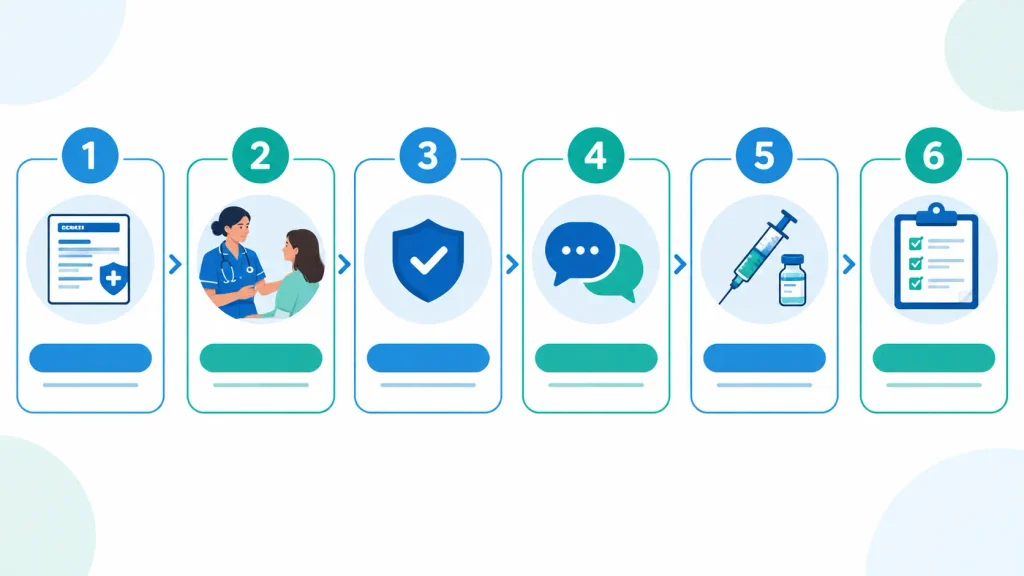
Nurses should follow these steps to support safe practice.
Step 1: Check the PGD – Make sure it is approved, current and appropriate for the service.
Step 2: Assess the patient – Check the patient’s condition, relevant medical history, allergies and eligibility.
Step 3: Confirm safety – Check contraindications and exclusion criteria specified in the PGD.
Step 4: Explain the treatment – Discuss the medicine, relevant benefits and risks, answer questions and obtain informed consent.
Step 5: Administer or supply the medicine – Follow the PGD and applicable medication safety procedures.
Step 6: Document and provide follow-up – Record the care given and explain any necessary aftercare or monitoring.
If the patient does not meet the criteria or requires further assessment, do not proceed under the PGD. Seek appropriate advice or arrange a referral.

PGD vs Patient Specific Direction (PSD)
A common source of confusion is the difference between a PGD and a Patient Specific Direction (PSD).
| Feature | PGD | PSD |
|---|---|---|
| Meaning | Direction for a defined group of eligible patients | Direction for an identified individual patient |
| Patient identification | The patient may not be individually identified beforehand | A specific patient is identified |
| Main purpose | Allows specified medicines to be supplied or administered under approved conditions | Provides an individual instruction for treatment |
| Key requirement | The patient must meet the PGD criteria | The nurse must follow the individual direction and applicable legal requirements |
A PSD is often used when a prescriber has assessed an individual patient and instructed that a specific medicine be administered or supplied.
CBT tip: If a question describes an individual patient receiving treatment following a specific prescriber’s instruction, consider whether a PSD is the appropriate answer.
What if a patient is not eligible under a PGD?
Imagine a patient attends a clinic for a medicine covered by a PGD. During the assessment, the nurse discovers that the patient meets an exclusion criterion.
The nurse should:
- Stop the supply or administration under that PGD.
- Explain the concern to the patient.
- Seek advice from the appropriate clinician or prescriber.
- Arrange further assessment or referral if necessary.
- Document the decision and actions taken.
The nurse must not ignore the exclusion criterion, change the PGD or administer the medicine simply because the patient requests it.
Patient safety must always come first.
NMC CBT exam tips
When answering PGD questions in the NMC CBT, focus on patient safety, legal requirements and professional responsibility.
Remember these five important points:
- PGD is not prescribing: It permits specified medicines to be supplied or administered to eligible patients without an individual prescription.
- Check eligibility: Never proceed if the patient fails the criteria or meets an exclusion criterion.
- Follow instructions: Do not change the medicine or dose outside the approved PGD.
- Seek advice: Refer patients when their needs fall outside the direction.
- Document care: Accurate records support continuity of care and accountability.
When faced with an unfamiliar question, choose the action that protects the patient and follows the approved instructions

Conclusion
Patient Group Directions are an important part of safe medicines management in eligible UK healthcare services. They allow authorised and competent professionals to supply or administer specified medicines to eligible patients without an individual prescription.
For nurses preparing for the NMC CBT, it is important to understand PGD eligibility, medication safety, exclusion criteria, documentation and the difference between PGDs and PSDs.
Regular revision and practice questions can help you strengthen your understanding of nursing practice and approach the CBT with greater confidence.
At Mentor Merlin, we encourage nurses preparing for UK registration to build their knowledge of medication safety, clinical practice and professional accountability.
Frequently asked questions about PGDs in nursing
Can a nurse administer a medicine without a prescription under a PGD?
Yes, in appropriate circumstances. A nurse who is individually authorised and competent may administer or supply a medicine within the scope of a valid PGD if the patient meets its criteria. The PGD is a separate lawful route, not permission to bypass the assessment, consent, medicine checks or documentation it requires.
Can every registered nurse use a PGD?
No. Registration alone is not enough. The nurse needs the appropriate training, competence and individual authorisation for the specific PGD within the organisation’s arrangements. The PGD must also cover the nurse’s professional group and the intended action. When these requirements are missing, seek an authorised colleague or another lawful pathway.
What happens if a patient does not meet the PGD criteria?
Do not use that PGD for the patient. Assess any immediate clinical risk, explain the next step and arrange suitable review, referral or a patient-specific prescribing route where appropriate. Document the assessment and advice. The person may still need treatment, but a different lawful decision-making route is required.
Is a patient group direction the same as a PSD?
No. A patient-specific direction concerns an individually identified patient and comes from an appropriate prescriber. A PGD sets conditions for a defined group and allows eligible, authorised professionals to assess and treat individuals within those conditions. Both require safe practice, but they provide different forms of authority.
What should I revise about PGDs for the NMC CBT?
Learn the difference between a PGD and an individual prescribing instruction; check document validity, practitioner authorisation and patient eligibility. Practise scenarios involving exclusions, allergies, consent, medicines checks, documentation and referral. Use current NMC and NHS guidance to verify rules rather than expecting one medicine-specific list to cover every service.
Read our recent blog – “Psychiatric Diagnosis and Labelling: NMC CBT Guide” – to ensure your journey stays on track.
Why Wait? Just Merlin It!
Free Consultation – Chat now with a Mentor.