

A psychiatric diagnosis can help a person access appropriate care, but a label can also shape how others treat them. For nurses, the difference matters. You may need to understand a diagnosis to plan care while still seeing the individual beyond their medical record. This guide explains psychiatric diagnosis and labelling, why clinicians use diagnostic categories, how stigma can affect safety and recovery, and what a nurse should do when a label risks obscuring a person’s needs. If you are preparing for the Nursing and Midwifery Council (NMC) computer-based test (CBT), you will also find practice scenarios and a practical method for choosing person-centred answers. It is revision support, not a substitute for local policy, specialist assessment or current NMC guidance.
What do Psychiatric Diagnosis and labelling mean?
A psychiatric diagnosis is a clinical description of a recognised pattern of experiences, symptoms and effects on daily life. Examples include depression, bipolar disorder and schizophrenia. A trained clinician reaches a diagnosis by considering history, current presentation, the person’s own account, risk, physical health and, when appropriate, information from others. They may use a recognised classification system to communicate their findings. A diagnosis is not a complete account of somebody’s personality, values, relationships or future.
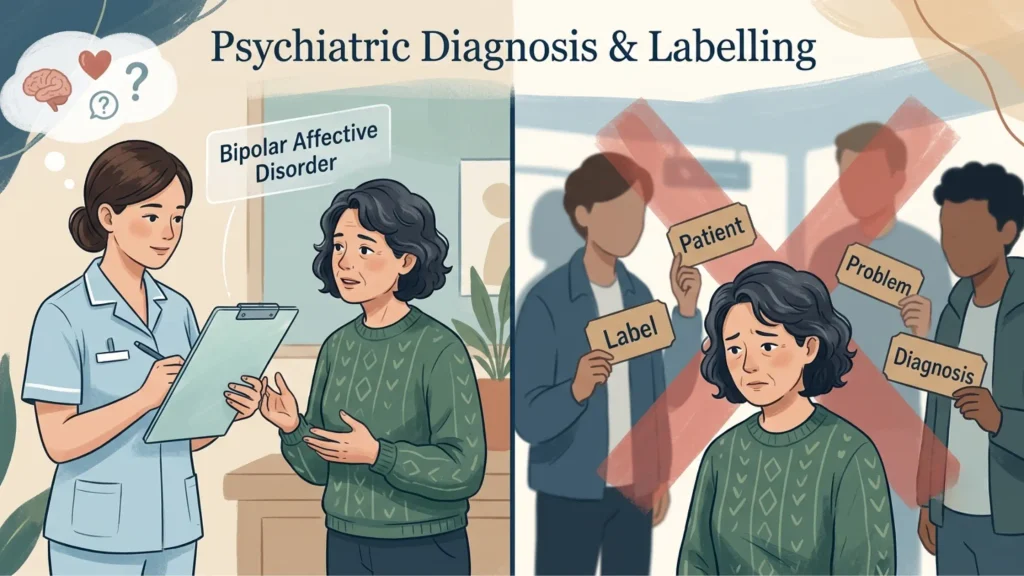
Labelling refers to applying a name or category to someone. In healthcare, this may be a useful shorthand: a documented diagnosis can help a team understand previous treatment and plan follow-up. Outside that context, a label can become a stereotype. Saying “a person living with schizophrenia” keeps the person visible; reducing someone to “a schizophrenic” can suggest that a diagnosis defines their whole identity. Respectful wording is important, although preferences vary: ask how the person describes their own experiences rather than assuming that any single phrase suits everyone.
A diagnosis can change as new information emerges. Symptoms overlap, and physical illness, substances, medication effects, sleep loss and difficult life events may affect a mental state. A nursing assessment should therefore examine the person in front of you, not simply repeat an old entry in the notes. Record observed facts and what the person reports; do not present a provisional impression as a confirmed specialist diagnosis.
Why is Psychiatric Diagnosis important in Nursing care?
Psychiatric diagnosis supports communication, clinical decisions and continuity. It can guide discussion of evidence-based treatment, inform a referral to a specialist service and help a multidisciplinary team understand what has been tried before. For some people, a name for their experiences provides relief and a starting point for asking questions. It may also make it easier to explain care options and identify appropriate sources of support. These are possible benefits, not guarantees: one person’s response to receiving a diagnosis may be very different from another’s.
Diagnosis also helps nurses anticipate possible needs. A person with a history of severe depression, for example, may need a thoughtful assessment of mood, sleep, functioning and safety. However, a history alone does not tell you what is happening today. Some people with the same diagnosis have very different symptoms, strengths and preferences. Ask what matters to the person, check their understanding of the diagnosis and involve them in care planning as far as possible.
Good care combines diagnostic information with an individual formulation: an explanation of how biological, psychological and social factors may contribute to this person’s difficulties. Housing insecurity, bereavement, discrimination, physical illness or medication problems can change the care required. Nurses may contribute important observations, but diagnosis and treatment decisions must remain within each professional’s competence and local scope of practice. If information is uncertain, clarify it with the relevant clinician rather than guessing.
The risks of Labelling: Stigma and Diagnostic Overshadowing
A psychiatric label can carry social stigma. People may encounter inaccurate assumptions about dangerousness, ability, parenting or reliability. Some internalise those messages and become reluctant to seek help. Even well-intentioned staff may speak over someone, disclose sensitive information casually or explain every concern as a symptom of mental illness. These behaviours damage trust and can delay care. Use non-judgemental language, listen without making assumptions and share information only when there is a lawful, justified reason.
Diagnostic overshadowing happens when a clinician attributes new symptoms to an existing mental health or other diagnosis without adequate assessment. Imagine a person with a documented anxiety disorder who reports chest pain and breathlessness. It would be unsafe to presume that the symptoms are “just anxiety”. Assess for urgent physical causes according to the setting’s protocols, identify red flags and seek prompt help. Similarly, a person with schizophrenia who becomes suddenly confused may have an infection, delirium, medication effect or another acute problem. The record is relevant background, not a reason to dismiss change.
Labelling can also obscure strengths. A person may work, care for family members and manage symptoms effectively while still needing support during an episode of illness. Balanced documentation includes what the person can do, what support they want and what risks have actually been identified. Avoid turning generalisations about a diagnostic group into claims about an individual. If colleagues use stigmatising language, challenge it professionally and redirect the conversation to observed needs and safe care.
Person-centred Assessment: look beyond the Diagnosis
Start with a calm introduction, explain your role and ask what the person wants help with today. Find out how symptoms affect sleep, appetite, activity, relationships, work and safety. Ask about physical symptoms and relevant medication, including recent changes and possible adverse effects. Consider communication needs: an interpreter may be necessary, and a family member is not automatically an appropriate substitute for a professional interpreter. Where the person wishes, involve their support network in ways consistent with consent and confidentiality.
A mental state assessment may include appearance, behaviour, speech, mood, thought, perception, cognition and insight, but it should not become a checklist performed without empathy. Describe what you see and hear and distinguish that from the person’s account. For example, “person reports hearing a voice when alone” is more precise than an unsupported judgemental label. Explore distress, coping and immediate needs without arguing about the reality of an experience. Take concerns seriously even when you do not share the person’s interpretation.
Risk assessment is individual and ongoing. If there are indications of self-harm, suicide, neglect, exploitation or risk to others, ask direct, sensitive questions within your training and follow local escalation procedures. Do not assume a particular diagnosis means that somebody is dangerous. Equally, do not ignore immediate warning signs because an individual appears articulate or has no previous diagnosis. If risk is acute, stay with the person where safe, summon appropriate help and follow the service’s emergency pathway. Document what was said, what you observed, the actions taken and whom you informed.
Consider culture, faith, trauma history and the person’s own understanding of their experiences. A description that sounds unfamiliar to a nurse may have a different meaning in the person’s community; respectful questions are more useful than quick assumptions. People may also worry about the consequences of a diagnosis for work or family life. Acknowledge those concerns, explain what you know and seek advice on questions outside your role.

Consent, Confidentiality and Professional Accountability
A psychiatric diagnosis does not, by itself, remove a person’s right to make decisions. In England and Wales, capacity under the Mental Capacity Act 2005 is decision-specific and time-specific, with a presumption of capacity unless established otherwise. Support people to decide by offering accessible information and enough time. Do not confuse disagreement with lack of capacity. Other UK jurisdictions have different legislation, so follow the law and policies applicable to your setting and seek senior guidance if uncertain. Likewise, the presence of a mental health diagnosis does not automatically mean someone is detained under mental health legislation.
Share a diagnosis or other sensitive information with the care team only as necessary for safe care and in accordance with legal and organisational requirements. Explain confidentiality and its limits honestly; there may be a justified need to disclose information when there is a serious safeguarding concern or other lawful basis. Do not promise absolute secrecy. When documenting, use accurate clinical terms, attribute reported information to its source and avoid offensive or speculative descriptions. This helps the next professional understand both the person’s needs and the reasons for decisions.
The NMC Code emphasises prioritising people, practising effectively, preserving safety and promoting professionalism and trust. In a question about labelling, these principles point towards listening, dignity, clear records, consent and appropriate escalation. They do not support ignoring physical symptoms, making a diagnosis outside your competence or sharing personal information indiscriminately.
Psychiatric Diagnosis and Labelling in the NMC CBT
For CBT preparation, learn the underlying professional principles rather than memorising stereotypes attached to diagnoses. The exam may present a person who has a recorded condition but now has a new symptom, a distressed family member seeking information, or a colleague using disrespectful language. Read the full scenario and identify the immediate issue: is someone physically unwell, at risk, unable to access information or facing a breach of confidentiality? Then decide what a nurse should do first within their role.
A useful approach is Assess, Protect, Respect, Escalate. Assess current symptoms and context rather than relying on the label. Protect the person when there is an immediate safety concern. Respect their preferences, dignity, privacy and decision-making rights. Escalate new or worsening concerns to an appropriate clinician and document the handover. This is a revision memory aid, not an official NMC algorithm. Always read the precise wording of each question and use current guidance if it differs from a simplified study rule.
Watch for options that sound efficient but are unsafe: attributing acute confusion to a longstanding diagnosis, telling relatives everything without considering consent, or treating a diagnosis as proof that a person cannot decide. A better answer usually includes an individual assessment and appropriate action. For current test structure and candidate materials, consult the NMC test of competence information rather than relying on an old question bank. Mentor Merlin’s CBT preparation programme can help you practise applying these principles to scenarios.

Five practice CBT-style questions with explanations
These are original revision questions, not official NMC exam items. Choose the safest response and explain why the alternatives could delay care or compromise a person’s rights.
Question 1: New physical symptoms
A patient with a recorded panic disorder reports sudden chest pain and shortness of breath. Which action is most appropriate?
A. Reassure them that this is a panic attack.
B. Assess their current physical condition promptly and escalate according to the local urgent-care pathway.
C. Ask them to wait until their mental health appointment.
D. Record “anxiety” without examining them.
Answer: B. A previous diagnosis does not rule out a medical emergency. A timely physical assessment and appropriate escalation protect the patient. Reassurance may be helpful later, but it cannot replace assessment when symptoms could indicate serious illness.
Question 2: Sharing diagnostic information
A relative phones asking for a patient’s psychiatric diagnosis. The patient is an adult and has not given permission to share information. What should the nurse do?
A. Disclose the diagnosis because the caller says they are family.
B. Discuss the patient’s treatment but not the diagnosis.
C. Check the patient’s wishes and relevant information-sharing policies before disclosing personal information.
D. Refuse to listen to any concerns from the caller.
Answer: C. Being a relative does not automatically authorise disclosure. The nurse can receive information that may help care without confirming confidential details. Consider any relevant safeguarding or legal exceptions, and seek guidance when the situation is complex.
Question 3: Capacity and a mental health label
A person with bipolar disorder declines a proposed intervention. A colleague says, “They have a psychiatric diagnosis, so they cannot consent.” What is the best response?
A. Agree and seek family consent immediately.
B. Recognise that diagnosis alone does not establish lack of capacity; support a decision-specific assessment when there is a concern.
C. Proceed despite the refusal.
D. Remove the diagnosis from the notes.
Answer: B. Start from the presumption of capacity under applicable law and assess the particular decision only when there is reason to question capacity. Explain choices clearly and involve senior colleagues according to policy. A diagnosis must not replace a lawful assessment.
Question 4: Stigmatising language
During handover, a colleague describes someone as “a difficult schizophrenic”. What should the nurse do?
A. Repeat the phrase in the records for consistency.
B. Ignore it because handover is informal.
C. Redirect to respectful, factual language and the person’s current needs.
D. Assume the person will behave aggressively.
Answer: C. Handover should help the team deliver safe, individualised care. Replace stereotypes with observable facts, reported experiences and an agreed plan. Address repeated disrespect through appropriate professional channels if necessary.
Question 5: Sudden change in behaviour
A normally settled person with a history of depression becomes acutely disorientated. Which action should come first?
A. Attribute confusion to depression.
B. Wait to see whether it resolves overnight.
C. Assess immediate safety and possible acute causes, then seek urgent clinical review.
D. Give a new psychiatric diagnosis.
Answer: C. Sudden confusion can signal an acute illness requiring prompt assessment. Consider observations, medicines and other possible contributors within your role. Escalate and communicate the change clearly; do not anchor on the existing label.

CBT Revision tips: make the safest choice
When revising psychiatric diagnosis and labelling, create two columns: “useful clinical information” and “assumptions to avoid”. In the first, place documented history, current treatment and known support needs. In the second, place claims about behaviour, capacity or risk based solely on diagnosis. This exercise helps you separate evidence from prejudice. Next, practise one scenario at a time and explain why your chosen response is safer than each alternative.
Prioritise urgent physical problems and immediate risks, then consider consent, dignity, communication and follow-up. If an answer asks you to diagnose outside your role, skip assessment, ignore a person’s voice or disclose information unnecessarily, examine it carefully. Be alert to wording such as “first”, “most appropriate” and “new onset”. The best response depends on what has already been assessed and which action is needed now, not on a memorised phrase.
Finally, check primary sources. Review The Code, the NHS mental health information pages and, for England and Wales, GOV.UK’s Mental Capacity Act Code of Practice. The legal framework differs across UK nations and practice can change. Use these resources to verify your understanding, not to replace the policies of the organisation where you work. For structured revision alongside these sources, explore Mentor Merlin’s NMC CBT preparation and, if you are preparing for a later practical assessment, its NMC OSCE preparation.
Conclusion:
Psychiatric diagnosis and labelling are not the same as judging a person. A diagnosis can support communication and treatment planning; careless labelling can foster stigma and conceal new clinical needs. In nursing practice, assess what is happening today, listen to the person’s account, protect confidentiality and escalate changes promptly. For CBT scenarios, choose individualised, safe actions over assumptions based on a label. Build confidence with Mentor Merlin’s NMC CBT preparation programme and use its NMC OSCE preparation when you are ready to practise applying person-centred principles in clinical scenarios.

Frequently Asked Questions
1. What is the purpose of a Psychiatric Diagnosis?
A psychiatric diagnosis helps clinicians describe a pattern of difficulties, communicate across services and consider appropriate care. It may help a person understand their experiences and access support. However, it is only one part of assessment: current symptoms, physical health, life circumstances, strengths and the person’s goals also matter.
2. Is Psychiatric Labelling always harmful?
No. A diagnostic label can provide clarity and support continuity of care when used accurately and sensitively. Harm arises when a label becomes a stereotype, replaces an individual assessment or is disclosed without justification. Ask about the person’s preferences and use language that protects dignity.
3. What is Diagnostic Overshadowing in Mental Health Nursing?
Diagnostic overshadowing means overlooking a new problem because it is mistakenly attributed to a diagnosis already on record. For example, chest pain in a person with anxiety still requires appropriate physical assessment. Nurses should respond to current findings, consider alternative causes and escalate urgent concerns.
4. Does a Psychiatric Diagnosis mean someone lacks capacity?
No. A diagnosis does not automatically determine capacity. In England and Wales, capacity concerns are considered for a specific decision at a specific time, and people should receive support to decide. Follow the law relevant to your UK setting and seek advice when a decision is complex or urgent.
5. How should I answer labelling questions in the NMC CBT?
Look for the action that assesses present needs, preserves safety and respects the person’s rights. Avoid answers based only on stereotypes or an old diagnosis. Check whether there is an immediate clinical risk, then consider consent, confidentiality, documentation and appropriate escalation within the nurse’s role.
Read our recent blog – “Early Ambulation: Benefits, Risks & NMC CBT Tips” – to ensure your journey stays on track.
Why Wait? Just Merlin It!
Free Consultation – Chat now with a Mentor.